From data to insight: Where business analysts create value in Denmark
Business analysts are primarily recruited for the financial sector and the IT industry.
By Line Karkov
November 2025
When the board of IIBA Denmark Chapter established the association, the board took the initiative to investigate which industries business analysts work in across Denmark. The board did this to gain a better understanding of who the target audience for the association’s activities is.
Our knowledge as a board is limited to our own networks and experiences. While experience provides a solid foundation for decision-making, we need data to view things from an outside-in perspective. This is just as important for our small association as it is for the companies where we contribute daily to advancing the data-driven agenda.
How the Information was Collected
As member of the board, I was put in charge of this analysis. From June to November 2025, I gathered information on job postings on LinkedIn. The purpose was to investigate which industries in Denmark primarily recruit business analysts. To make the analysis concrete, it was limited to jobs posted with the title "business analyst" or "forretningsanalytiker," where the content of the job descriptions aligned with IIBA’s definition of business analysis. All in all 82 job postings.
To interpret the data from a broader perspective, I looked up the industry codes of all companies in the CVR (Erhvervsstyrelsens’s register of all companies in Denmark). The industry codes were then related to the highest-level industry classification in Danmarks Statistik's hierarchy. This approach makes it possible to look beyond the companies that happened to post a job during the period and to derive general insights about where business analysts are employed in the labor market.
To gain deeper insights, I asked Zachary Forchu for help in visualizing the data. He is an experienced business analyst specializing in process optimization. He uses advanced data analysis to identify efficiency opportunities and solve complex challenges, contributing to improved organizational operations and increased business value.
Regarding the data work itself, he explains:
“The data was stored in spreadsheets and then imported into a data visualization tool. Before analysis could begin, the dataset needed to be cleaned and transformed. This involved removing duplicates, correcting errors, filling in or removing missing values, and deleting irrelevant columns. I also renamed and standardized columns to ensure the dataset was consistent and easy to analyze. After preparing and structuring the data, I established a data model that reflected the purpose of the study. A one-to-many relationship was created between companies and job postings, enabling precise cross-filtering and ensuring insights could be tracked across tables. I developed calculations to capture key metrics, such as the total number of job postings, percentage distribution, and distribution by job titles. These calculations formed the quantitative backbone of the analysis. With the completed data model, I built a series of visualizations highlighting the most significant patterns. These included industry breakdowns, job title distributions, and in-demand skills during the data collection period within business analysis in Denmark.”
Analysis Results
The visualization results reveal some clear trends. Zachary states:
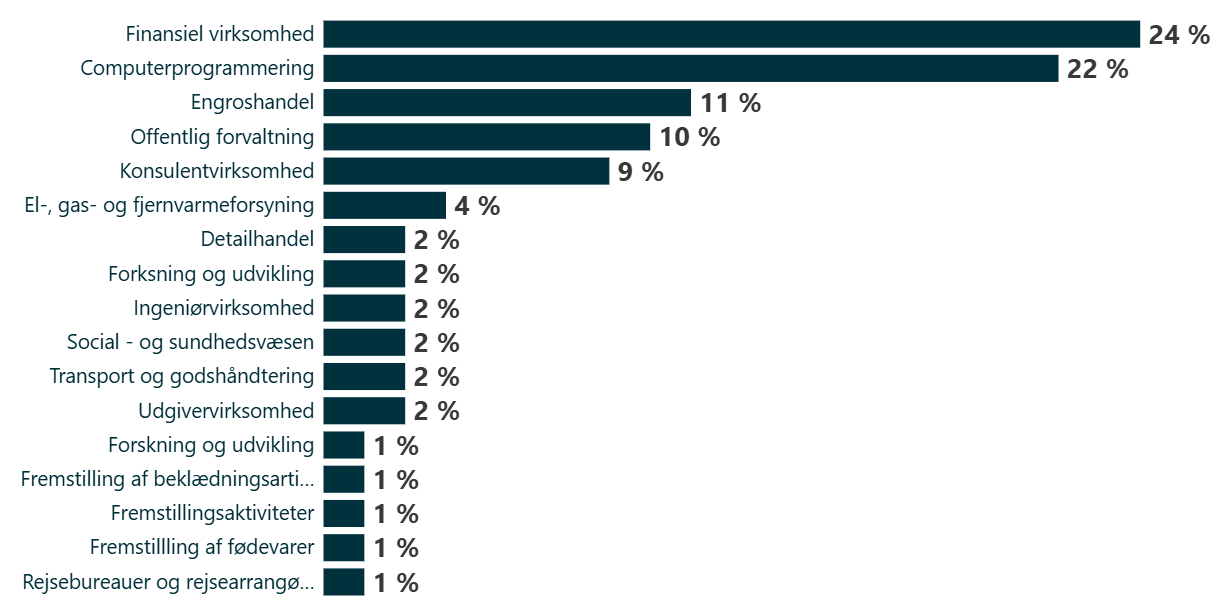
“This chart shows the percentage distribution of posted positions across sectors. It is evident that the financial sector and the IT industry are the primary recruiters of business analysts. I assume this reflects their need for strong data-driven decision-making, regulatory compliance, and digital transformation.”
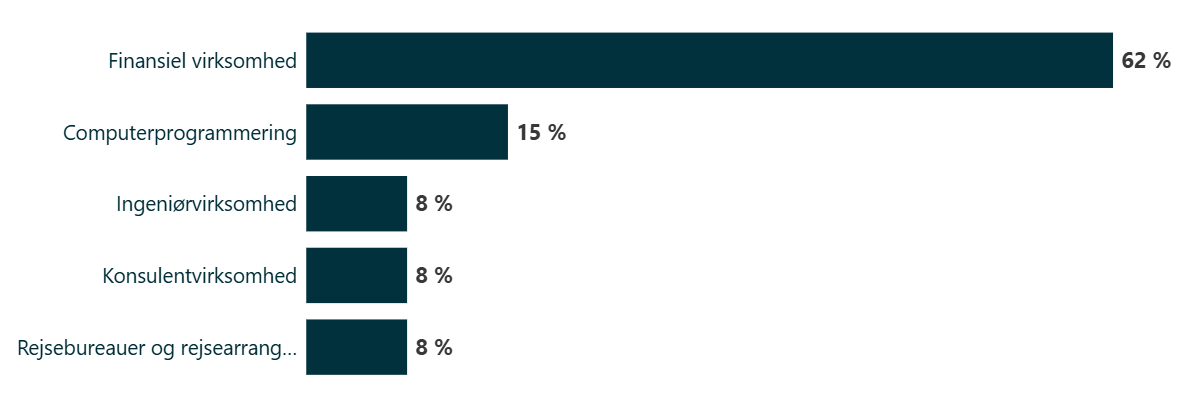
“When we look at senior roles, the relatively low number of senior positions is mainly concentrated in the financial sector.”
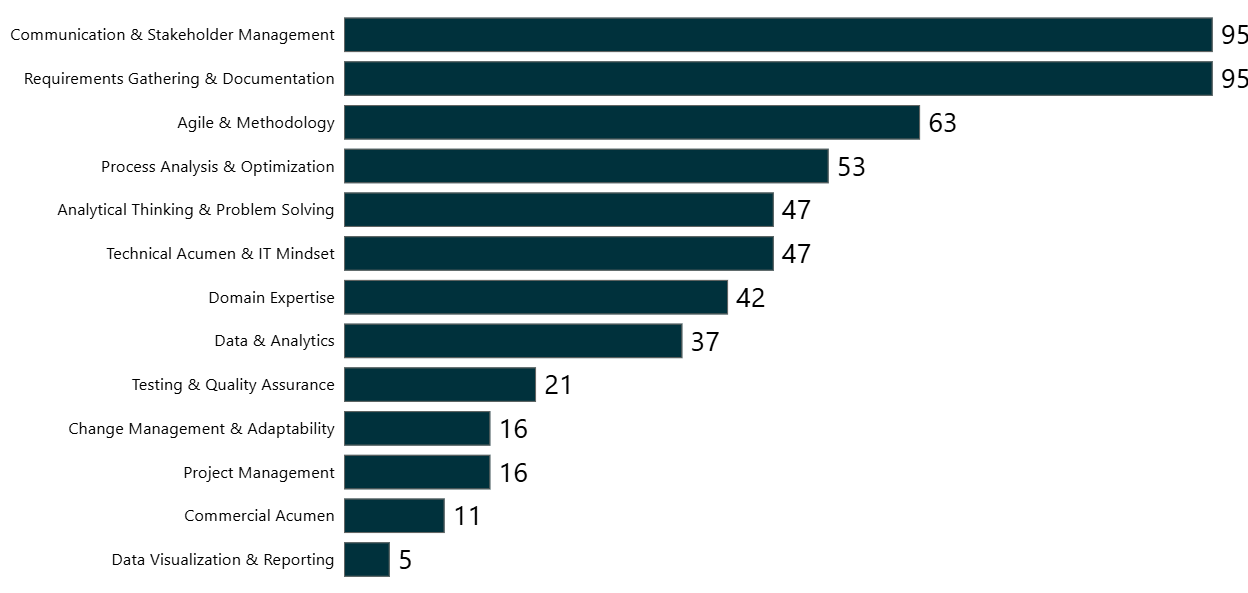
“This chart illustrates the proportion of job postings that mention the most in-demand skills, with figures shown as percentages. Unlike many other analyst roles, business analysts rely heavily on skills beyond technical knowledge. Based on job advertisements, these are the skills most frequently requested for business analysts in Denmark, along with expertise in agile methodologies.”
Answers That Raise New Questions
The analysis is based on a relatively limited dataset and can be seen as a snapshot. However, it provides a good indication of where business analysts are found in the Danish labor market. There are many aspects to explore further based on these figures, and I look forward to doing so together with the rest of the board and our entire network and professional community. Finally, I hope this analysis serves as a good example of how business analysis can be practically applied and contribute to strategic decision-making.
Which competencies are in demand?