Becoming a Business Analyst: How a New Graduate Navigates the Role’s Complexity
"If I ever feel I have reached a limit in one area, I do not necessarily need to change careers. I can move into a new context and continue learning there."
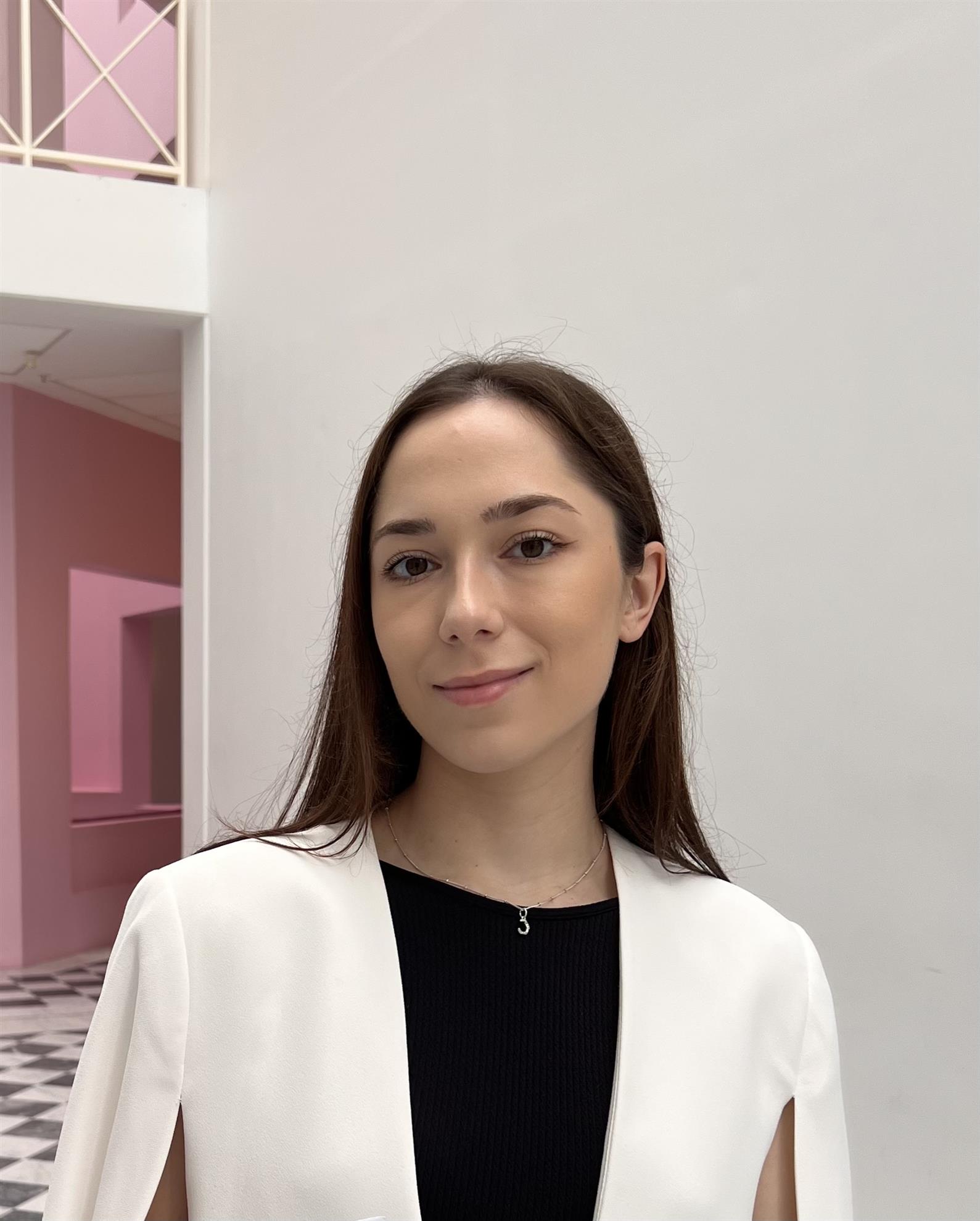
By Line Karkov
August 2026
After graduating from Copenhagen Business School, Catalina Pasari landed her first job as a business analyst. The IIBA Denmark Chapter has asked her to share her experiences stepping into the role, hoping to inspire other graduates to pursue a career in business analysis.
In this interview she tells us about her first year at Danske Bank.
Why did you choose a job as business analyst?
“I chose a job as a business analyst because I enjoy roles that require wearing multiple hats, that allow me to connect different areas and let me develop in more than one direction. The role is both complex and flexible, and that combination suits me well.
It is complex because it requires strong communication, good analytical thinking and the ability to ask the right questions. A business analyst needs to understand different stakeholder needs, connect topics that may not seem related at first, translate between business and technical teams, challenge assumptions and help shape solutions that are practical and deliver value. And this list is not exhaustive.
What I find especially interesting is that the role can look very different depending on the company, industry, team or product. That flexibility matters to me. It means I can grow deeper in one area, but I can also move into a new domain or team and be exposed to something completely different. I like knowing that if I ever feel I have reached a limit in one area, I do not necessarily need to change careers. I can move into a new context and continue learning there.”
Has the role met your expectations?
"Yes, and in many ways it has exceeded them. Before becoming a business analyst, I knew the role involved communication, assessment of requirements and problem solving. What I did not fully realise was how broad the knowledge base needed to be. A business analyst is often expected to understand the business context, the organisation, the industry, the users, the solution and the delivery approach. That can be challenging, especially when you are new to a domain or system. At the same time, it is one of the reasons why I enjoy the role. You are constantly learning and building a more complete view of how things work. You do not need to be the expert in everything, but you do need to be curious, structured and able to connect information from different places. For me, that makes the role both demanding and rewarding."
What has been the biggest surprise?
"I was most surprised by how creative and adaptive business analysts could be. There is usually a clear purpose behind what a business analyst needs to do, such as understanding a problem, clarifying requirements or helping a team make decisions. However, the way you get there is often not fixed. Different situations require different approaches, and a large part of the job is deciding what method fits the context best.
I expected the role to be more formula-based. I thought I would study frameworks like BABOK, follow the guidance and apply it step by step. In reality, frameworks are useful, but they are only tools. The real skill is knowing when to use them, how much structure is needed and when a simpler conversation is more effective. That level of freedom surprised me. It also made me realise how much critical judgement the role requires."
What is the best part about the role?
"The best part of the role is getting to explore something new and gradually make sense of it. I enjoy working with a new system, product or domain that I do not know much about at the beginning. It can feel uncomfortable at first, but it is also exciting because it gives me the chance to learn from scratch. I find it very rewarding when I move from knowing only the basics, to being able to explain the product, support decisions and help drive improvements. That sense of progress is one of the main reasons I enjoy business analysis. It gives me the opportunity to learn, contribute and solve real problems concomitantly.
When family members who have no connection to business analysis ask me what I do for work, I like to make the analogy that I am a detective, but in a corporate setup. While a detective solves the mystery of 'Who did it and why?', I focus on finding out 'What is the real problem and how should we fix it?'"
What is the most valuable thing you have learned so far?
"Every activity should be driven by value creation. Not every request should automatically become a change. Sometimes a request may sound useful at first, but after investigating it properly, understanding the requirement and looking at the cost versus the benefit, it can become clear that the change is not worth making. In those situations, the best decision may be not to proceed. That can feel difficult, especially when people are insistent and persuasive, but it is important to focus on whether the change will actually deliver value. Because of this, I often ask myself, “Does this deliver value?” when doing a task. If the answer is no, it helps me shift my focus to work that will have a stronger impact.
Another important thing I have learned is the value of asking simple questions. Sometimes you need to take the approach of a five-year-old and keep asking “why” until you understand the real issue. A person may come with a solution in mind, but after asking the right questions, you may find that the actual problem is quite different. Other times, stakeholders may explain the big picture but leave out important details. In those moments, asking basic questions is essential, even if they feel obvious. It helps make sure you fully understand the need and do not end up solving the wrong problem."
Read more about where business analysts are employed
The financial sector is one of the sectors that employ many business analysts. We know this based on an analysis of job openings we have done earlier.
Read more about the top sector that employ business analysts in Denmark: